
Affiliate marketing only works when the journey from a publisher’s recommendation to an advertiser’s conversion can be measured accurately. That measurement process is known as affiliate tracking. When someone clicks an affiliate link, the tracking system records information about the referral. If that visitor later completes a qualifying action, such as making a purchase, submitting a lead or starting a subscription, the system attempts to connect that conversion with the original publisher.
This is what allows advertisers to understand where performance came from and publishers to receive the correct commission. Modern tracking can involve cookies, unique click IDs, browser-based tags, pixels, APIs and server-to-server communication, making the process far more sophisticated than simply counting how many people clicked a link.
What Is Affiliate Tracking?
Affiliate tracking is the technology and reporting process used to connect traffic sent by a publisher with actions completed on an advertiser’s website or app. Each affiliate link normally contains identifiers that tell the network which publisher, campaign or offer generated the visitor. When the link is clicked, the tracking platform records the event and creates a reference that can later be matched with a conversion. If the visitor completes the required action within the advertiser’s attribution rules, the publisher may receive credit and commission. Tracking therefore sits at the centre of the relationship between publishers, advertisers and affiliate networks because it determines both performance reporting and payment.
Accurate tracking also gives both sides information they can use for optimization. Publishers can see which pages, traffic sources and affiliate offers convert best, while advertisers can evaluate which partners are producing valuable customers. Without reliable tracking, even a strong campaign can appear unprofitable simply because conversions are not being recorded correctly.

How Is an Affiliate Click Recorded?
The process usually begins when a publisher places a unique affiliate link inside an article, comparison page, email, social post or other approved traffic source. That link contains information identifying the publisher and often the specific offer or campaign. When a visitor clicks it, the affiliate platform records the event before redirecting the visitor to the advertiser’s destination page. A unique click ID may be created at this stage, along with information such as the timestamp, campaign, referring publisher and other permitted tracking parameters.
Depending on the tracking setup, a first-party cookie or another browser identifier may also store referral information so the system can recognise the visitor if the purchase does not happen immediately. This is why affiliate clicks should not be confused with conversions. A click only shows that a user followed the tracked link; it does not mean that the advertiser has generated a sale, lead or another payable action.
How Is an Affiliate Conversion Measured?
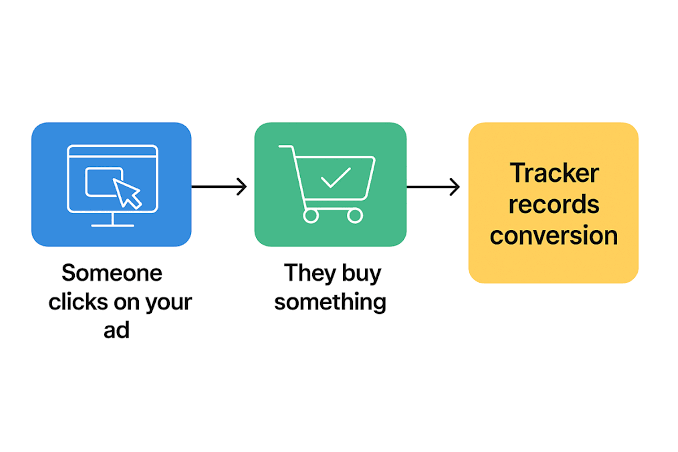
A conversion happens when the visitor completes the action defined by the affiliate offer. In ecommerce this is usually a purchase, while SaaS campaigns may track free trials, subscriptions or paid accounts. Lead-generation programs might count completed forms, verified applications or other approved actions. When that event occurs, the advertiser’s system sends conversion information back to the affiliate platform through a browser tag, pixel, API or server-to-server postback. The platform then attempts to match the conversion with the earlier click.
If the click and conversion can be matched successfully and the action meets the campaign rules, the transaction appears in affiliate reporting. Information such as order value, commission, conversion time and transaction ID may also be recorded. The exact process varies between platforms, but the principle remains the same: identify who referred the user, record the qualifying action and assign credit according to the advertiser’s attribution rules.
What Information Can Affiliate Tracking Record?
Affiliate tracking systems may capture several pieces of campaign information so publishers and advertisers can understand performance more clearly:
- Publisher ID identifies which affiliate generated the traffic.
- Click ID gives an individual tracked click a unique reference.
- Offer or campaign ID identifies the promoted advertiser or campaign.
- Timestamp records when the click or conversion occurred.
- Sub IDs help publishers identify pages, placements or traffic sources.
- Conversion value records the value of a purchase or qualifying action.
- Commission value shows the amount potentially earned by the publisher.
- Transaction ID helps prevent duplicate conversions and supports validation.
- GEO or device data may help analyse performance by market or device type.
- Conversion status can show whether a transaction is pending, approved or rejected.
The exact amount of data collected depends on the network, advertiser, consent requirements and applicable privacy rules. More data is not automatically better; useful tracking should collect the information needed to measure performance while respecting privacy and platform requirements.
How Do Cookies and Attribution Windows Work?
Cookies have traditionally played an important role in affiliate tracking because many people do not purchase immediately after clicking a recommendation. A visitor might read a review on Monday, compare other products during the week and complete the purchase several days later. If the advertiser’s attribution window is still active, stored referral information can help connect that sale with the publisher who originally introduced the customer. Cookie duration varies between affiliate programs, which means publishers should always check an offer’s specific terms rather than assuming every advertiser uses the same window.
Attribution rules also determine what happens when a customer interacts with several publishers before buying. Many affiliate programs have historically used a last-click approach, where the last eligible affiliate interaction receives credit. However, customer journeys are becoming more complicated, and advertisers are increasingly analysing assisted conversions and multiple touchpoints as well. For a practical example of how different buying journeys affect results, EncoreAff’s SaaS vs. E-commerce Offers: Which Converts Better for Publishers? explains why conversion behaviour can vary considerably by offer type.

Client-Side vs. Server-to-Server Affiliate Tracking
Modern affiliate programs often use more than one tracking method because relying entirely on a visitor’s browser can create measurement gaps. Client-side tracking uses technologies such as cookies, JavaScript and conversion pixels running within the browser. Server-to-server tracking, often called S2S or postback tracking, instead allows the advertiser’s server to communicate conversion information directly with the affiliate platform. This can make conversion reporting less dependent on browser behaviour and is becoming increasingly important as privacy controls and browser restrictions evolve.
| Tracking Method | How It Works | Main Consideration |
|---|---|---|
| Client-side tracking | Uses browser cookies, tags or pixels | Simple but more affected by browser restrictions |
| Server-to-server tracking | Servers exchange click and conversion information directly | More robust but requires technical integration |
| Hybrid tracking | Uses both client-side and server-side methods | Provides stronger coverage and redundancy |
For publishers and advertisers, the important question is not which method sounds most advanced but whether the setup records legitimate conversions accurately. EncoreAff highlights advanced tracking and real-time analytics within its services for advertisers, reflecting how central reliable measurement is to performance marketing.
Why Do Clicks Not Always Become Conversions?
A campaign can generate thousands of affiliate clicks without producing the same number of conversions because clicking only indicates interest. Visitors may compare prices, leave the advertiser’s site, decide the product is not suitable or return much later. Conversion rate therefore depends on more than the publisher’s ability to generate traffic. Landing-page quality, product price, brand trust, shipping, payment methods, device experience, GEO and audience intent can all influence whether the visitor completes the desired action.
Publishers should therefore analyse the relationship between clicks and revenue rather than chasing click volume alone. A page sending 500 highly relevant visitors may generate more commission than another sending 5,000 poorly matched users. Metrics such as conversion rate, earnings per click and revenue per visitor can reveal whether traffic is commercially valuable. EncoreAff’s Review: The Most Profitable Product Categories for New Affiliates also explains why conversion rate, average order value and audience fit matter more than headline commission percentages alone.

Why Can an Affiliate Conversion Be Pending or Rejected?
A recorded conversion does not always become an approved commission immediately. Many advertisers hold transactions in a pending stage while they check whether an order remains valid. Customers may cancel purchases, return products, fail payment verification or submit duplicate or invalid leads. An advertiser may also reject a transaction when it violates program rules, such as prohibited traffic sources, unauthorized brand bidding or another form of non-compliant promotion.
Fraud prevention creates another validation layer. Affiliate networks may analyse click patterns, devices, GEOs, conversion timing and behavioural signals to identify suspicious activity before commissions are approved. Legitimate publishers benefit from this process because fraud can reduce advertiser confidence and damage the economics of an entire program. EncoreAff’s Fraud Detection in Affiliate Networks: What Actually Happens Behind the Scenes provides a deeper look at how automated systems and human review can work together when validating affiliate activity.
How Should Publishers Use Affiliate Tracking Data?
Good tracking is useful for much more than checking how much commission has been earned. Publishers can compare which articles generate the highest click-through rates, which offers convert most effectively and whether certain GEOs, devices or placements produce stronger revenue. Sub IDs can make this analysis even more detailed by separating traffic from different buttons, comparison tables, pages or campaigns. Over time, this information helps publishers decide which content deserves updating, which advertisers should receive more visibility and which offers should be replaced.
The key is to optimize around meaningful commercial metrics rather than vanity numbers. High traffic does not necessarily mean high affiliate performance, and the advertiser with the highest commission rate is not always the most profitable. Publishers need to compare clicks, conversions, approved revenue and earnings per click together. Once those fundamentals are understood, automation becomes more useful because it can highlight changes and opportunities faster without replacing human judgment.

What Can Cause Affiliate Tracking Problems?
Tracking problems can appear when links are configured incorrectly, conversion tags fail to fire, redirects remove tracking parameters or server integrations do not pass the correct identifiers. Browser privacy restrictions, consent settings and ad-blocking technologies may also affect some client-side methods. Another common problem occurs when publishers change links manually and accidentally remove required tracking information. Advertisers can experience similar issues if checkout systems, payment providers or app journeys are not fully connected with the affiliate tracking setup.
For this reason, campaigns should be tested before significant traffic is sent. Publishers should confirm that links redirect correctly and appear inside reporting, while advertisers should test the full click-to-conversion journey. Large discrepancies between internal sales data and affiliate reporting deserve investigation rather than being treated as normal. Reliable performance marketing begins with reliable measurement.
The Future of Affiliate Tracking Is More Accurate and More Privacy-Aware
Affiliate tracking is moving toward a combination of first-party data, server-side measurement, APIs and stronger conversion validation. Browser-based tracking will continue to play a role, but networks and advertisers increasingly need systems that remain dependable as privacy rules, consent requirements and browser technologies change. The challenge is to improve attribution without creating unnecessary data collection or reducing transparency for users and partners.

For publishers, the practical lesson is simple: understand how the offers you promote are tracked and monitor reporting closely. For advertisers, investing in accurate conversion measurement protects both budgets and publisher relationships. An affiliate program cannot optimize what it cannot measure, and publishers cannot confidently scale campaigns when they do not trust the numbers.