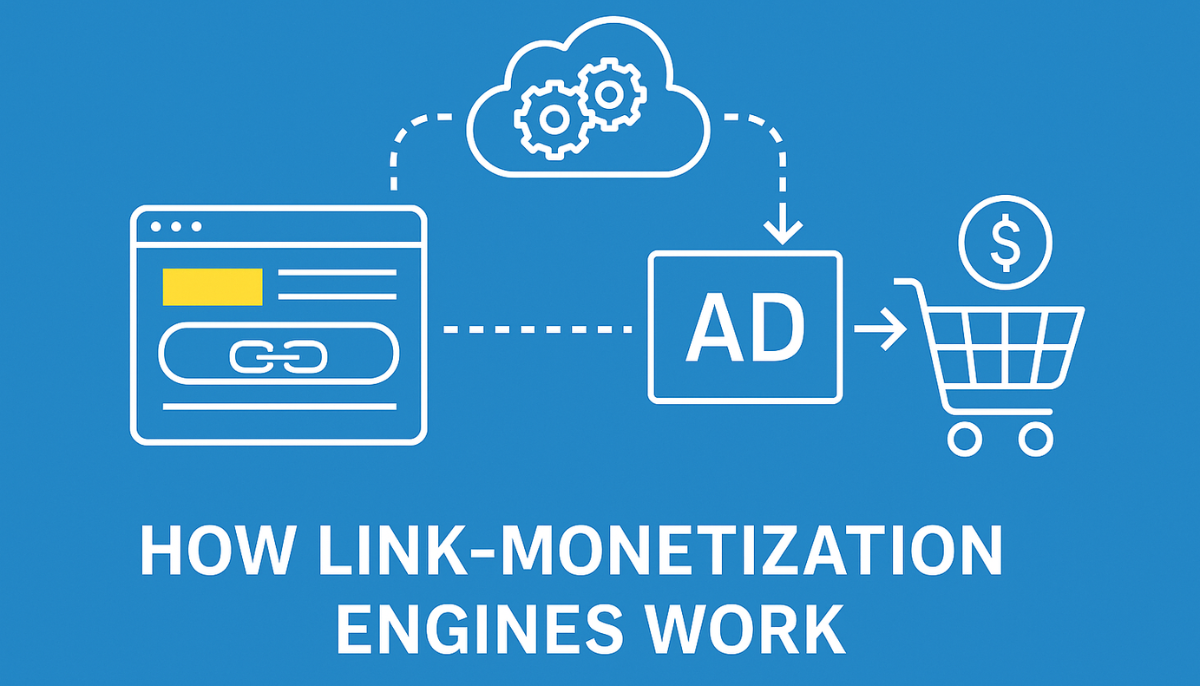
Most publishers know that link-monetization tools can turn ordinary outbound links into revenue-generating opportunities. But the mechanics behind these engines often feel like a black box. You paste a script, links start earning money, and that’s about as far as the explanation usually goes.
The truth is much more interesting. Modern link-monetization systems rely on a mix of real-time scanning, data signals, partner APIs, and decision engines that work quietly in the background. For publishers, understanding how these pieces fit together makes it easier to optimize earnings without compromising UX.
Let’s break down what’s actually happening behind the scenes, in plain language.
Why Link Monetization Exists in the First Place
Publishers link to thousands of pages: brands, products, travel sites, software tools, retailers, you name it. Some of those destinations have affiliate programs, but manually applying for each one, updating links, replacing broken ones, and tracking performance is nearly impossible at scale.
Link-monetization engines emerged as the “middle layer” that solves all of that:
They scan outbound links, identify which ones can be monetized, and automatically transform them into affiliate links, all without requiring a human to chase partnership approvals.
But the magic isn’t in the idea; it’s in the automation.

Step 1: The Script Loads and Starts Scanning the Page
Once a publisher installs the monetization script, it begins by reading the page’s HTML. It looks specifically for outbound links, anything pointing to a domain outside the publisher’s site.
What it identifies can vary:
-
Regular hyperlinks inside articles
-
Buttons or CTAs that contain URLs
-
Links inside comparison tables or product modules
-
Even dynamically inserted links from the CMS
The script doesn’t change anything visually. It simply tags each link to see whether it’s a candidate for monetization.
Step 2: Matching Links to Monetizable Merchants
After scanning, the engine needs to figure out whether a link points to a merchant that has an affiliate program. This usually involves a few layers of logic:
-
Check if the domain exists in the engine’s merchant database
-
Check if the specific product or page is eligible
-
Identify the correct affiliate network or partner program
This matching happens in milliseconds. The publisher doesn’t have to search for affiliate programs, the platform already has relationships with networks and advertisers and knows exactly where each brand is available.
What’s interesting is that many platforms also maintain fallback options.
If Merchant A doesn’t pay on a specific URL, but Merchant B sells the same product and does, the engine can choose the better option.
Step 3: Turning Normal Links Into Affiliate Links
Once a match is identified, the platform rewrites the link, but only in the browser. The original link inside the CMS never changes, which protects editorial integrity.
The monetized link usually contains:
-
A tracking parameter
-
A merchant ID
-
The publisher’s unique identifier
-
Redirect rules
-
Sometimes metadata for attribution
This is what allows the advertiser or network to see who sent the click and credit the publisher for conversions.

Step 4: Real-Time Decision Making
Not all links should be monetized every time. Quality engines make decisions dynamically, considering factors like:
-
Geo-matching (different merchants pay better in different countries)
-
Device type
-
Out-of-stock products
-
Updated commission rates
-
Campaign availability
-
Program pauses or outages
In other words, link monetization is not static. It’s constantly evaluating opportunities and adjusting on the fly to maximize the earning potential of each click.
Step 5: Handling Redirects Without Hurting UX
A common concern among publishers is: “Will the affiliate redirect slow down my site or frustrate readers?”
Modern platforms build optimized redirect paths designed to:
-
Load quickly
-
Reduce latency
-
Maintain tracking integrity
Some systems even use server-side routing to shorten the number of hops. The goal is to preserve UX while still capturing the necessary attribution data.
Step 6: Reporting, Attribution & Revenue Tracking
The final layer is analytics, the part publishers interact with most often.
A link monetization engine typically tracks:
-
Clicks
-
Conversions
-
EPC (earnings per click)
-
Merchant performance
-
Top-earning pages
-
Geographic breakdowns
With this data, publishers can spot:
-
Which content themes make the most money
-
Which merchants convert better
-
Where link placement affects performance
-
How seasonal trends impact earnings
The more the engine learns, the better it gets at optimizing monetization automatically.

A Note on SEO and User Experience
Good monetization engines don’t interfere with search engine crawlers.
Google sees the original unmodified hyperlink in the source code. The affiliate rewrite only happens client-side, which protects SEO and avoids indexation issues.
From a UX standpoint, the best platforms avoid aggressive visual changes. Users simply click a link like normal, land on a relevant page, and move on with their journey. Monetization should enhance value — not disrupt it.
Why Publishers Benefit From Understanding This System
While the technology is automated, publishers who understand how link monetization works can take advantage of its strengths:
-
Writing with clearer commercial intent
-
Structuring content so valuable links appear in high-impact areas
-
Choosing merchant-friendly topics
-
Avoiding link patterns that create low-value traffic
The engine does the heavy lifting, but the publisher influences the strategy.
Final Thoughts
Link-monetization engines might seem invisible, but behind the scenes they’re doing a tremendous amount of real-time evaluation, matching, and optimization. For publishers, they represent one of the simplest ways to unlock new revenue from content you’re already creating.
When understood and used thoughtfully, these systems provide a cleaner, more scalable alternative to manually managing affiliate programs, without compromising the reader experience that ultimately drives long-term success.